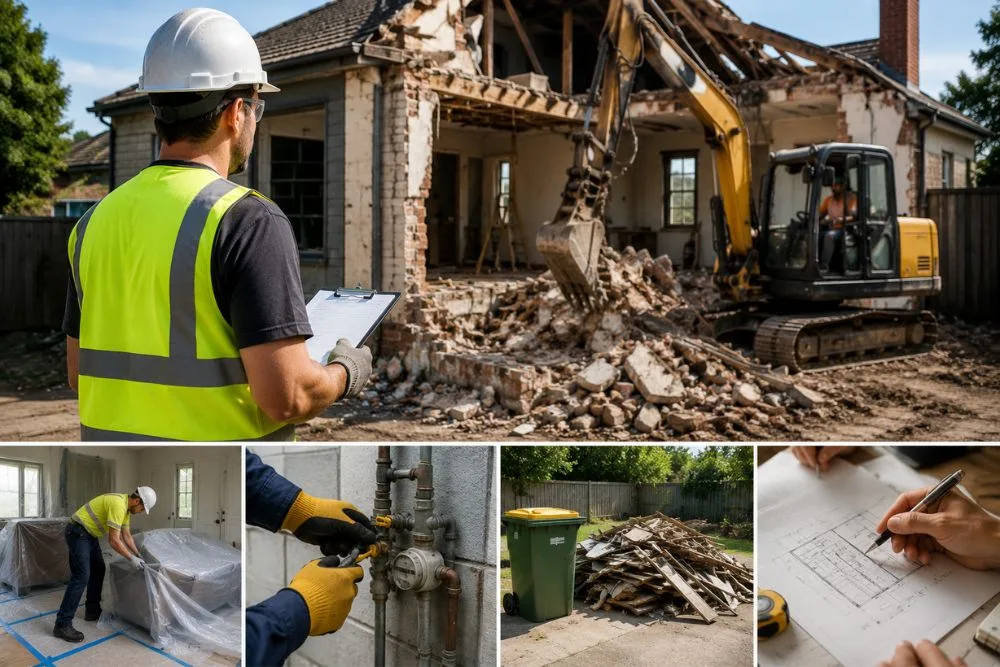
Handling hazardous materials during demolition requires a careful and well-planned approach. Hazardous waste removal demolition plays a critical role in ensuring safety, compliance, and environmental protection throughout the project.
The process begins with identifying hazardous materials on-site and continues through several critical stages, ultimately leading to safe disposal and site clearance. Below, I’ll walk you through each step so hazardous waste can be managed confidently and responsibly.
The first step in demolition risk management is accurately identifying hazardous materials present on-site. In my experience, this is the foundation of effective hazardous waste removal and demolition, ensuring all risks are identified early. Many materials found in older buildings can pose serious risks if not properly identified and managed.
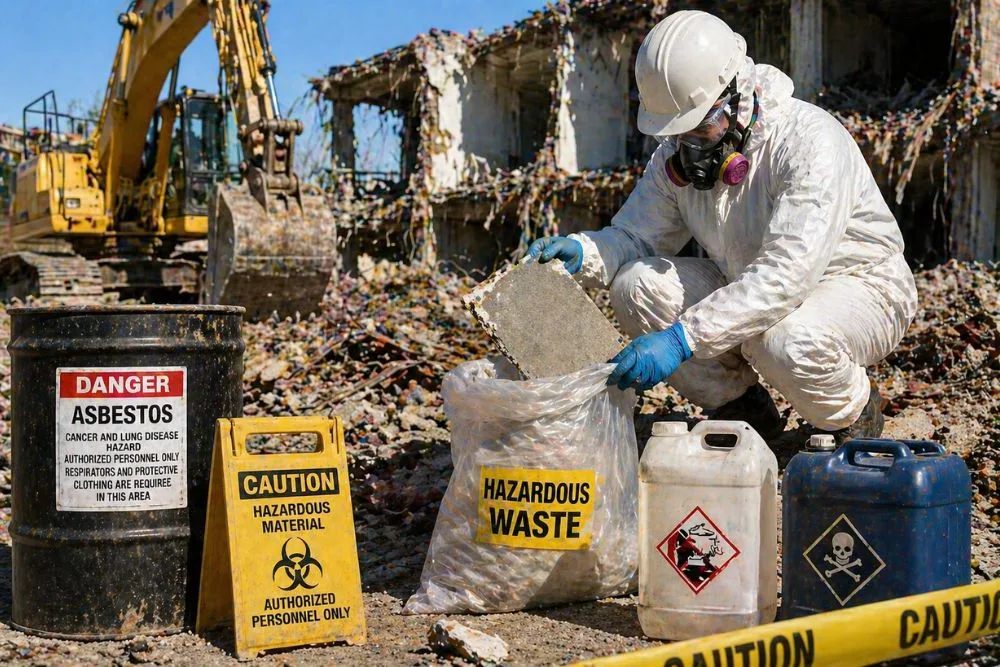
Common examples include asbestos, lead-based paint, PCBs (polychlorinated biphenyls), and certain insulation materials.
A thorough site assessment is essential. This involves working with qualified professionals who can identify and assess potentially hazardous materials. Buildings constructed before the 1980s often contain asbestos, which becomes dangerous when disturbed. Lead may also be present in older paints and plumbing systems, while PCBs can be found in electrical equipment and outdated lighting systems.
It’s important to create a detailed inventory of these materials, including their type, location, and approximate quantity. This ensures nothing is overlooked and allows safety procedures to be tailored accordingly.
Once hazardous materials have been identified, the next step is assessing the scope of the hazardous waste. This step is critical as it determines the resources and strategies required for safe removal.
This involves evaluating:
Sampling and laboratory analysis are often used to determine contamination levels and guide appropriate remediation strategies.
This assessment supports planning, resource allocation, and the selection of appropriate tools and safety measures, which are essential for effective hazardous waste removal and demolition.
With a clear understanding of the hazards, the next step is developing a demolition risk management plan. This plan acts as a guide for safe operations, outlining procedures for handling all identified risks.
Key elements include:
This plan ensures all work is carried out safely and in line with industry standards, supporting effective hazardous waste removal and demolition.
Engaging with regulatory authorities is essential when managing hazardous materials during demolition. Each region has specific laws governing waste removal and environmental protection.
In Australia, this typically involves working with environmental agencies and local councils. Understanding and complying with relevant regulations is key to project success.
This includes:
Strong communication with regulators helps ensure compliance while avoiding delays and potential penalties.
Once compliance requirements are met, safety measures outlined in the risk management plan must be implemented. These are designed to protect both workers and the environment.
Common measures include:
Proper implementation reduces the risk of accidents and ensures a safer work environment.
The use of appropriate tools and personal protective equipment (PPE) is essential for safe demolition work.
Tools and equipment should be selected based on the specific hazards present. Examples include:
PPE is equally important and may include:
All equipment should meet Australian safety standards and be suitable for the task.
Even with careful planning, unexpected hazards can arise. These may include previously unidentified materials or sudden exposure risks.
In such situations:
Clear communication and proper training help teams respond effectively without panic. A proactive approach ensures safety is maintained at all times.
The final stage involves the safe disposal of hazardous waste and clearing the site. All materials must be handled according to environmental regulations.
Working with licensed waste management facilities ensures proper disposal. Detailed documentation should be maintained to track waste from collection to final disposal.
Where possible, recycling and environmentally responsible practices should be followed.
The goal is to leave the site clean, safe, and ready for future use, with minimal environmental impact.
Managing hazardous materials during demolition is a complex process that requires careful planning, strict compliance, and a strong focus on safety. By following a structured approach—from identification through to disposal—demolition projects can be carried out safely and responsibly, protecting both people and the environment.



We accept all major credit cards